




Deck Tech
No Friends on
the Other Side
Ursula – Deceiver of AllSong Value Control
30 Characters23 Actions including 22 Songs5 Items2 Locations

Curtain up, take the stage
An Ursula deck for anyone who doesn't want to go unnoticed at the table
For my first deck tech, I could have built something nice. A friendly deck, a few charming interactions, an evening together after which everyone would happily invite me back.
Curtain up, take the stage, you poor unfortunate souls — because I chose Ursula.
Oddly enough, I owe her one of my favourite multiplayer experiences in Lorcana. Facing her together in Illumineer’s Quest showed me just how much fun this game can be when several people sit around a table figuring out how to get rid of a spectacularly uncooperative sea witch.
A small note on our record so far: with our regular decks, rather than lists built specifically for the encounter, we still haven't beaten the highest difficulty with two or three players. We're stuck on the one below it. (Yes, I know a purpose-built list changes how you can approach Ursula. Apparently, our strategy so far has mostly been to keep her company.)
But that isn't what today is about.
Today, I'd like to introduce a deck that changes one small detail of that experience: Ursula is on my side now.
And No Friends on the Other Side … that's my invitation to anyone who occasionally wants to let their inner Disney villain off the leash. Anyone who enjoys singing, drawing cards and watching their opponents' plans slowly disappear into thin air.
Not necessarily the list I'd use to introduce myself at a new table. At least not if I wanted to ask for everyone's phone numbers afterwards.
The idea: one song is good. An encore is better.
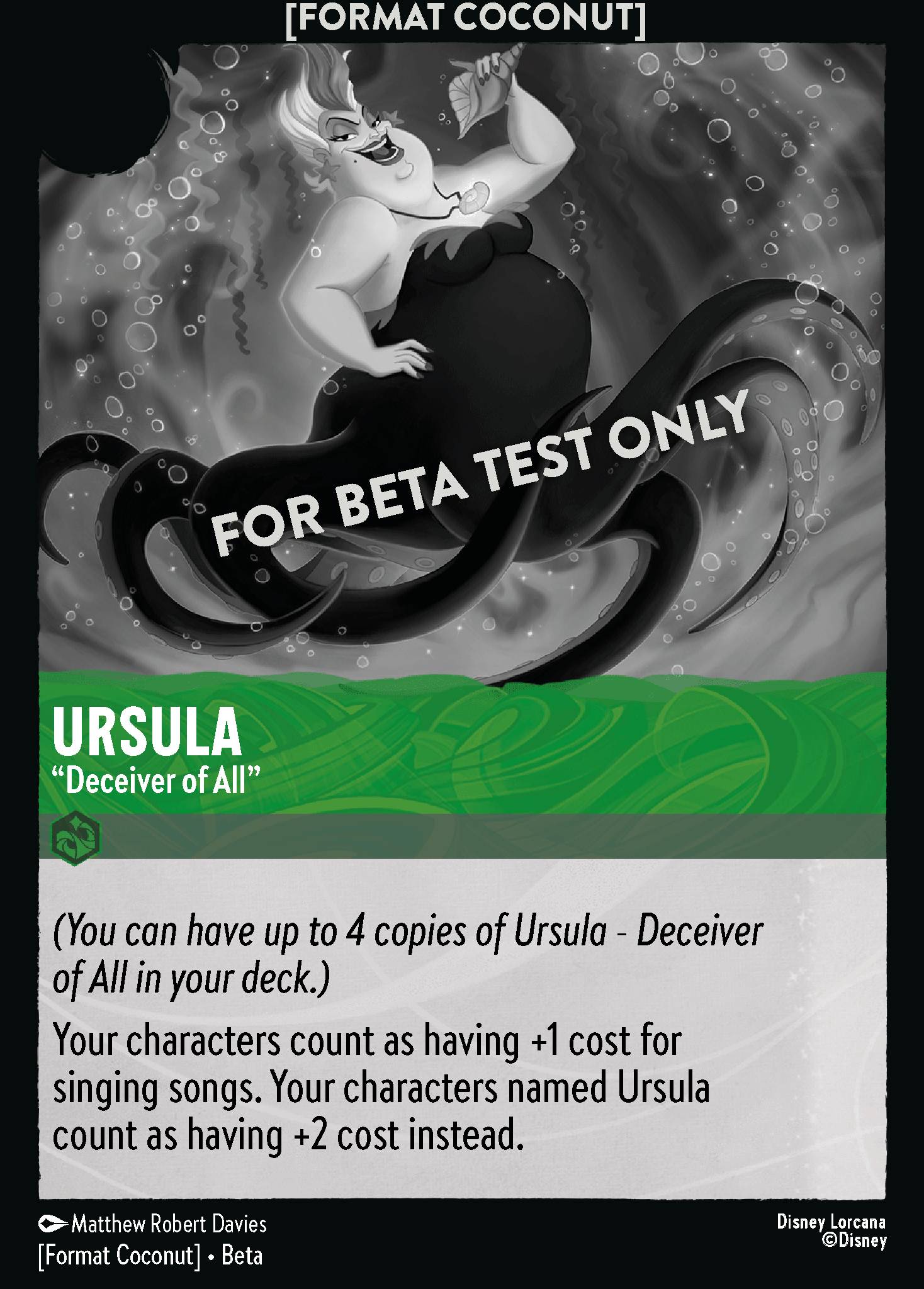
At the centre are our Ursula Coconut and Ursula – Deceiver of All.
Our Coconut lets our characters punch well above their weight when singing. Ursula benefits particularly well. And this is where a harmless little song starts turning into a full-blown musical storm.
Ursula can sing a song and then play it again from the discard for free. Afterwards, it goes on the bottom of our deck.
So my plan isn't particularly mysterious: get Ursula into play, wait a turn, hope she survives, give her the right songs and keep her on stage for as long as possible.
The important distinction is between a song, an encore and a second performance. Ursula sings once, then plays that song again. If I ready her afterwards, she can sing another song, complete with another encore. A proper concert, then.
That's exactly where I want to be.
The opening: try to look innocent
Before the musical storm arrives, though, I need to build a board with someone who can actually sing.
That's why I wanted my early characters to contribute more than a brief appearance on the lore track. I want information, resources that stay together, and small characters who don't suddenly become useless later on.
That thinking includes Diablo – Obedient Raven, Diablo – Maleficent's Spy, Chernabog's Followers – Creatures of Evil and Will o' the Wisp – Forest Spirit.
A small character doesn't have to take over the game immediately. If it sets something up, replaces itself or can become ink, then helps with singing together later, it has already earned its place.
A hand full of enormous songs looks impressive. Without singers, it's mostly a very ambitious songbook.


The architecture of the deck
Choosing the songs: something for almost every mood
I mainly want two things from my songs: they should expand my options or seriously restrict everyone else's.
Preferably both.
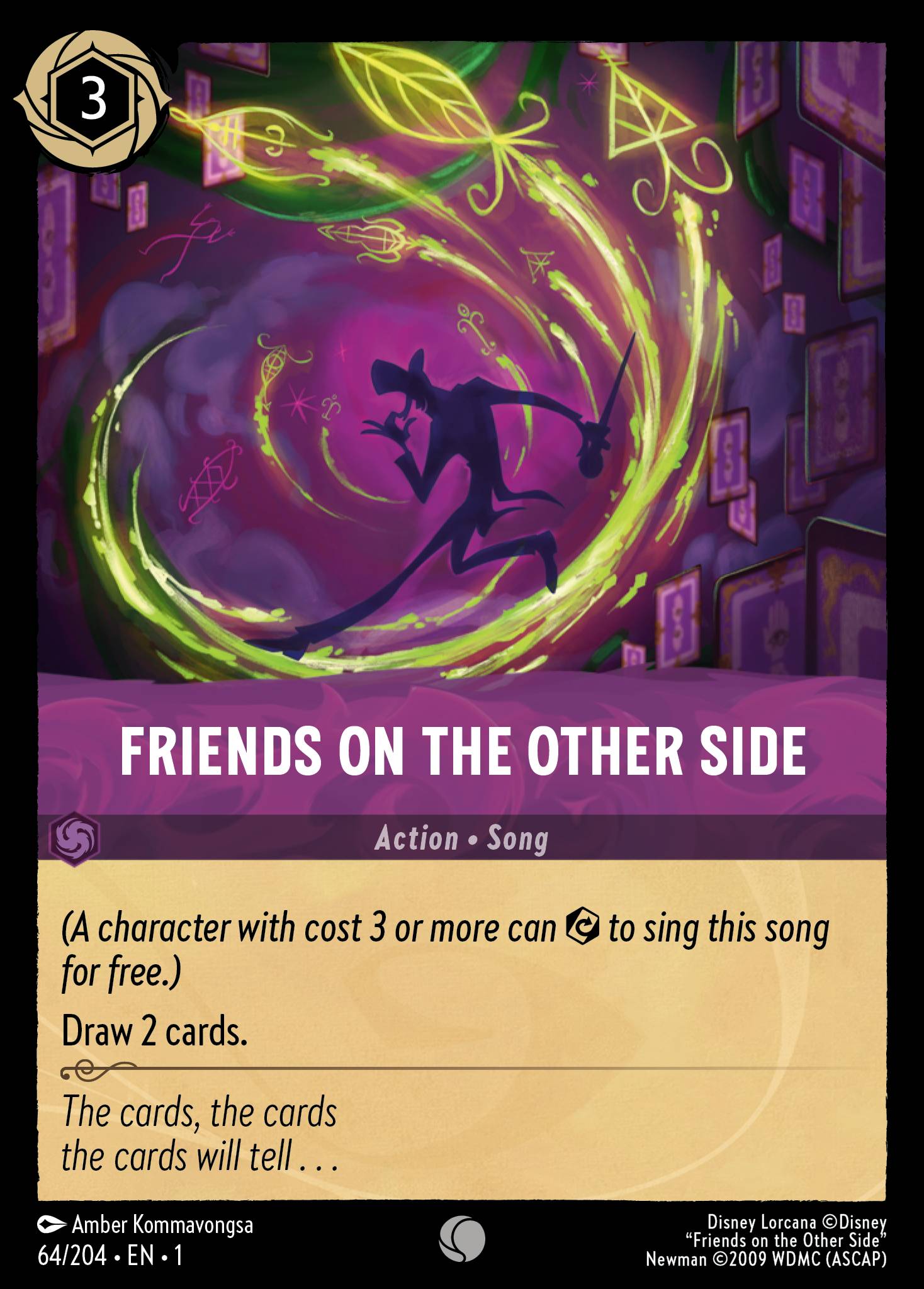
Friends on the Other Side is a wonderfully straightforward example. Drawing two cards is good. With Ursula, it becomes even more fuel.
So the deck's name doesn't mean we're giving up these friends. Just the chance of making new ones at the table.
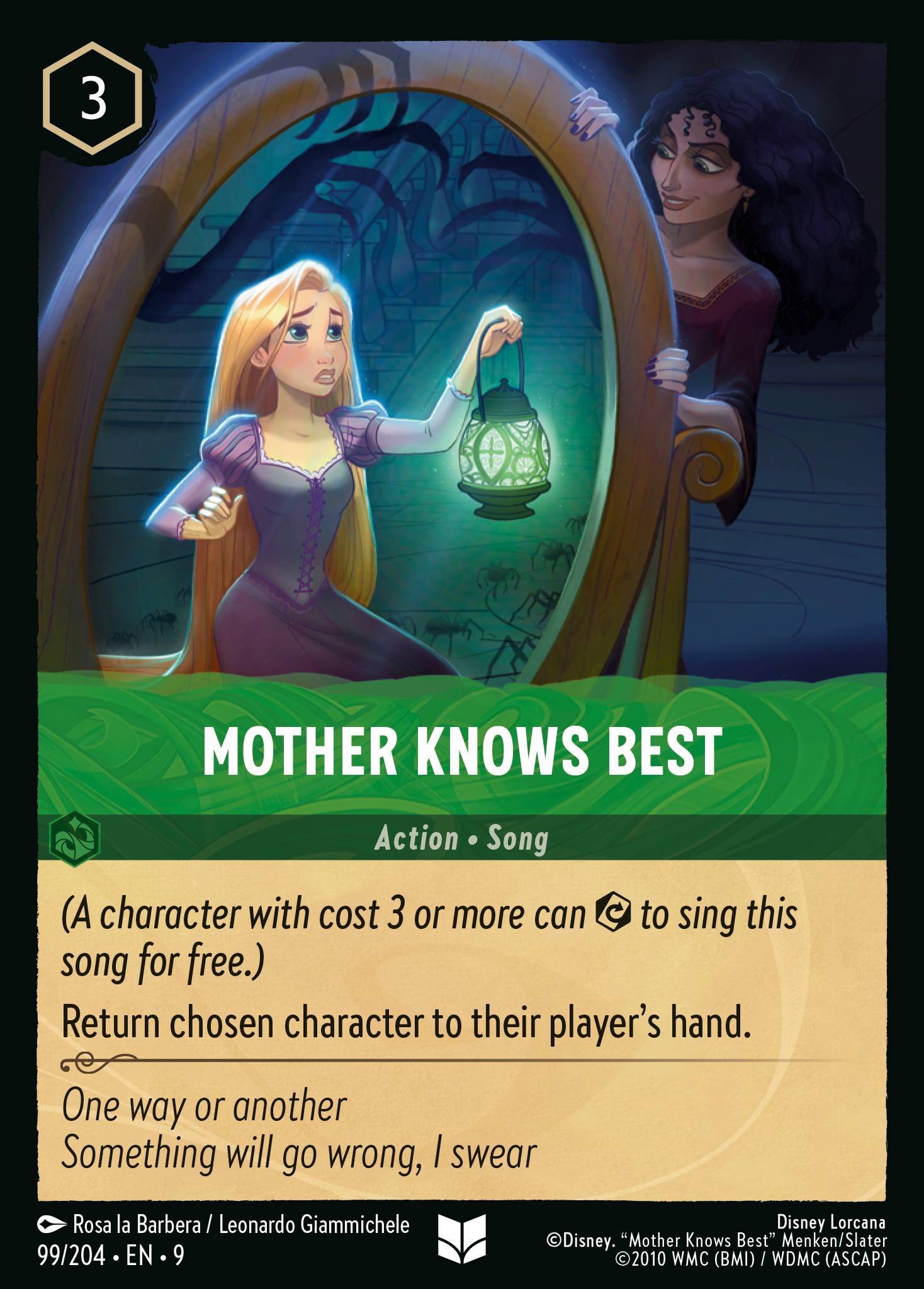
I like Mother Knows Best for its flexibility. An annoying opposing character can go back to hand. So can one of my own, if I want to use its play effect again. The same card helps either to clear things away or to reuse my own tools.
The Boss is on a Roll, meanwhile, helps make sure my next cards suit what I'm trying to do.
Then there are songs for exerting, removing, strengthening and drawing cards — and, of course, making the other players lose lore.

Ursula gets protection. And preferably no break.
Ursula is the heart of the deck. So I'm not particularly surprised when other people eventually decide they'd like her off the table.
I want to make life easier for her in two ways: protection and extra opportunities to ready.
When choosing protection, I especially look for ways to give her Evasive. That makes it harder for many opposing characters to challenge her after she sings.
It isn't a comprehensive life insurance policy, of course.
I just want removing her to take some effort.
This is where cards such as Shield of Virtue come in. Ursula sings, readies again and becomes available for the next part of our plan.
Nothing We Won't Do fits the same idea: ready characters, help them get through challenges this turn, then keep working.
LeFou remains a possible addition here. In my current selection, I've favoured other spots on the curve. If you want to put even more emphasis on readying, there's plenty of room to experiment.


Drawing cards: the choir needs fresh material
This deck wants to do lots of things in succession.
That works remarkably badly when I have exactly one card left after the first big performance.
That's why there's so much card draw in here.
Friends on the Other Side, Diablo – Obedient Raven and Diablo – Devoted Herald, Archimedes, Dr. Facilier, Mushu, Scrooge McDuck, Ursula – Power Hungry and other cards help in different ways to keep me from suddenly running out of breath.
The big songs are particularly interesting, of course.
Fantastical and Magical rewards a well-stocked choir and suddenly turns our small characters into valuable singers.
That's exactly why I like the early one-drops so much in this deck. Eventually, they stop being merely small characters.
They become part of the machine.
And machines famously work best when nobody keeps trying to banish Ursula from the outside.


The key synergies
The Muses: some guests just keep coming back
One of my favourite parts of the deck is the connection between songs and reusable play effects.
After I play a song, The Muses lets me return suitable characters to hand.
That can be an opposing character.
But it can also be one of my own.
That changes the question slightly. I'm no longer just asking what needs to disappear. I'm also asking who I'd like to play again.
Archimedes is a lovely example. When he comes back into play, I can get rid of another troublesome item.
Or Ursula – Power Hungry, with her powerful play effect.
Or Diablo – Maleficent's Spy, who gives me information about an opponent's hand.
Or Lady Tremaine, when I want to get an action back.
Suddenly, bounce isn't just removal.
It's recycling.
And recycling is a good thing, as everyone knows.
At least as long as I'm the one benefiting.


The songs eventually come back
One of Ursula's quirks is that the songs she replays end up on the bottom of my deck.
That's why I've deliberately included ways to shuffle my deck again.
DunBroch Family Tapestry is part of that, as is The Islands I Pulled from the Sea.
That doesn't automatically put the song back into my hand, of course.
But at least it isn't reliably sitting somewhere at the bottom of the deck, waiting for the game to last 47 turns.
At the same time, I don't want to play these cards solely for the shuffle effect.
If they also do another useful job, they fit the concept much better.


Control and the limits of diplomacy
Items? No, thank you.
In multiplayer especially, items can become rather unpleasant.
So I don't want to sit there politely watching someone set up their game with Lucky Dime or another engine.
With Archimedes, Wildcat and my other ways to remove items, I can intervene directly.
It's especially nice when removing an item also improves my hand.
That's typical of this deck for me: ideally, a card should do more than solve one problem. If it also gets another engine moving, so much the better.


When talking no longer helps
Of course, returning things to hand eventually stops being enough.
Sometimes the board is simply full.
That's what the less diplomatic solutions are for.
Be Prepared is the big reset button. If the board gets out of control, it's time to clear everything away.
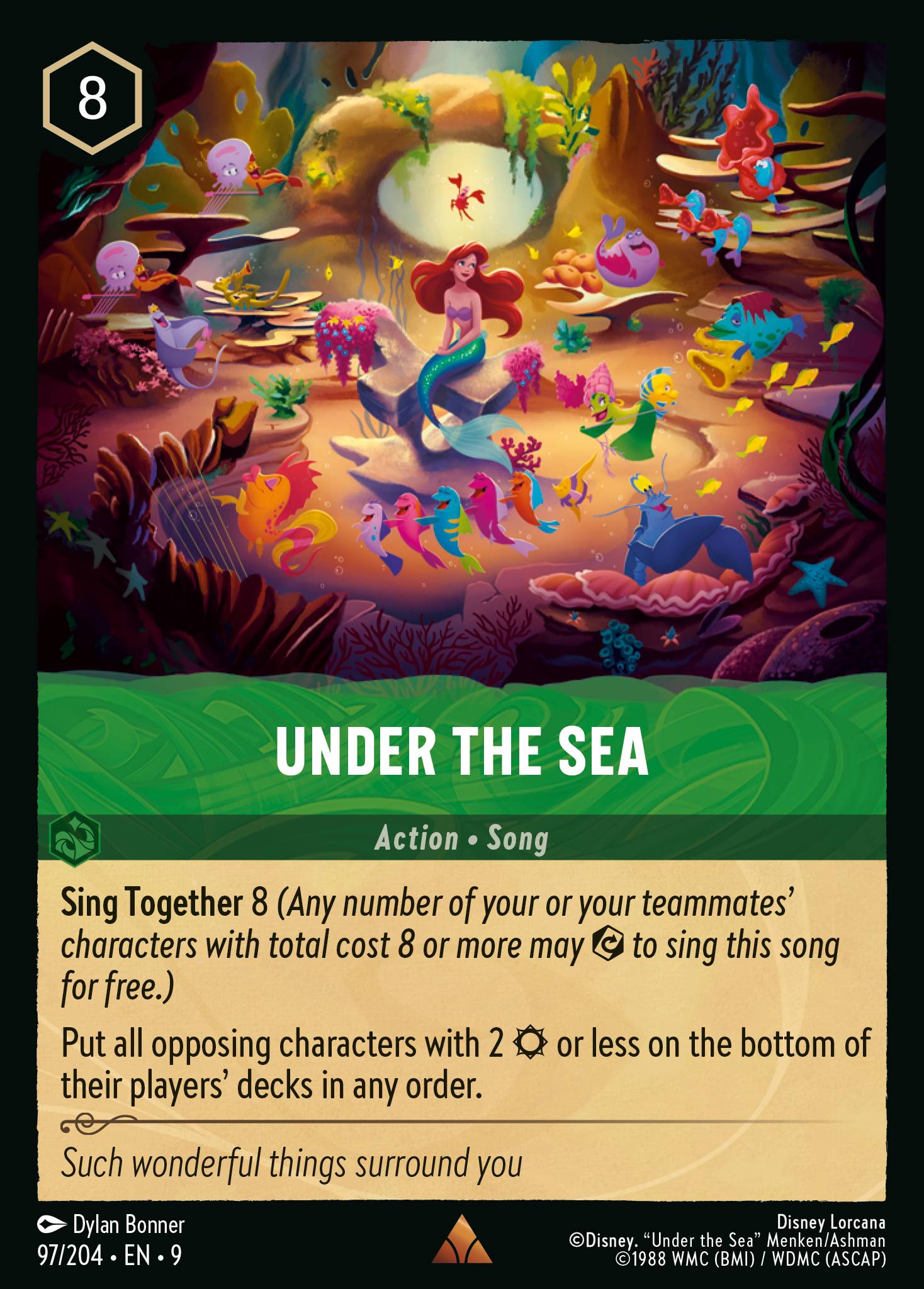
Under the Sea, meanwhile, can be much more one-sided against certain wide boards.
Then there are smaller removal options, prepared challenges, and cards that let me move damage or exert opposing characters.
I don't want to automatically make every problem at the table my own, though.
In multiplayer, that's a very easy way to give three other people an excellent game and eventually leave yourself without resources.
Sometimes my neighbour's problem is allowed to remain my neighbour's problem.
That sounds selfish.
I prefer strategically sustainable.


Card spotlights: how the concert ends
Maui does more than the heavy lifting
Maui – Half-Shark fits this plan brilliantly for me.
Play actions, gain lore, challenge something, then get an action back from the discard.
He connects several parts of the deck in the process.
It gets especially good with cards that help him survive challenges. Then Maui can go out every turn, take something off the table and bring resources back at the same time.
That's exactly the kind of character I enjoy in decks like this.
Tigger only looks harmless

Then there's Tigger.
Evasive, plenty of willpower, and initially not the sort of character that makes all three opponents count their removal cards at once.
That can change.
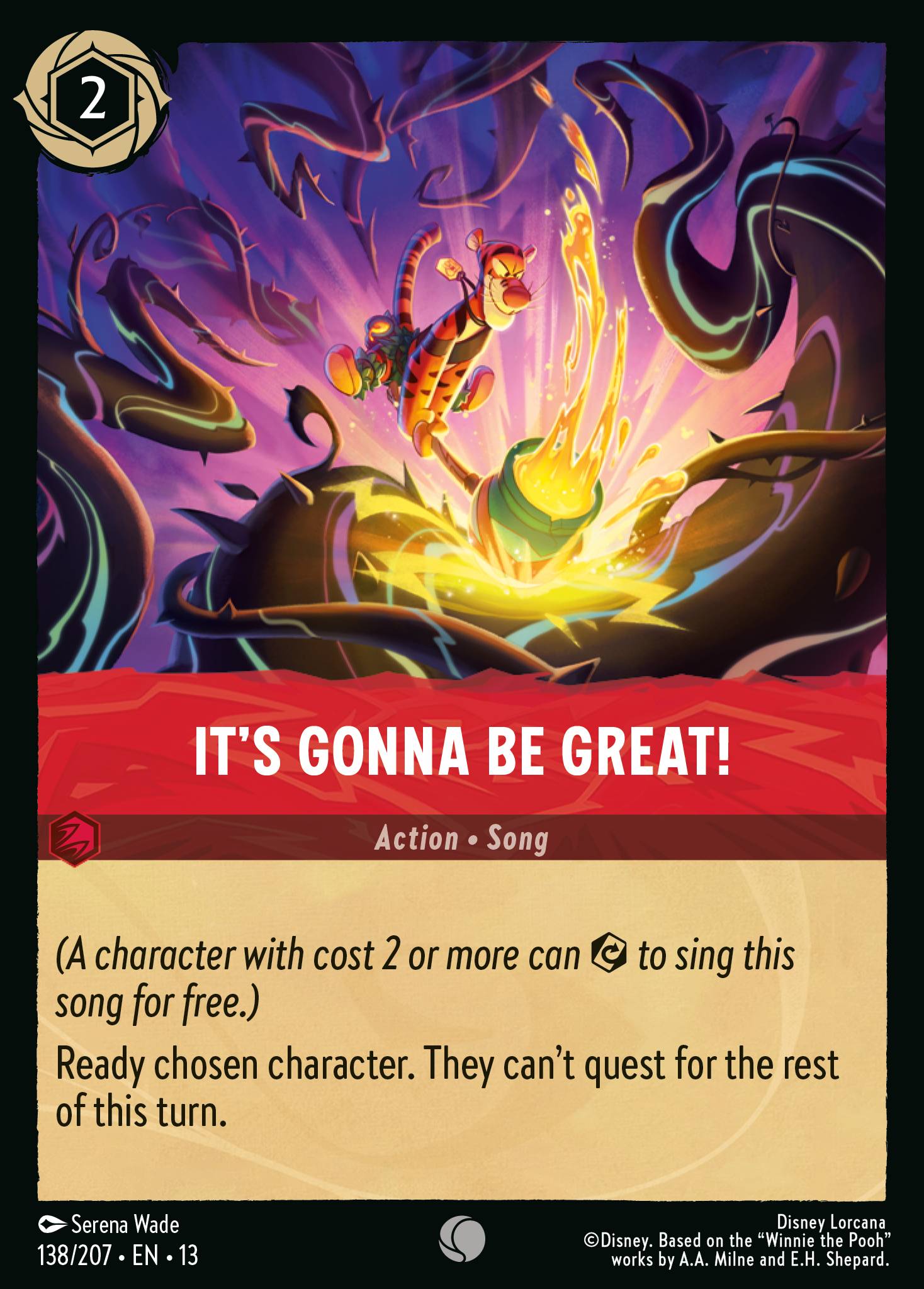
If I play several actions in one turn, Tigger can suddenly become a very serious win condition.
Four songs later, the same Tigger nobody noticed a minute ago looks considerably less cute.
And I love cards like that.
Everyone is watching Ursula.
Tigger stands beside her, pretending nothing is happening.
Gaining lore while everyone else loses it
Since I often want my characters to sing rather than quest, I need other ways to finish the game.
This is where the deck becomes thoroughly unfriendly.
A Pirate’s Life takes lore from the others and gives some to me.
Ursula – Power Hungry can reduce opposing lore while drawing cards.
Scrooge McDuck also contributes to that plan.
Owl Island makes our first action each turn cost one less ink for each of my characters there. Playing my second action in a turn also earns me three lore — I like it!
Then there's Source of the Vine: exactly the kind of multiplayer card that looks harmless at first, then becomes a permanent part of the conversation.
“Are you paying?”
A small question.
Over and over.
My Commander past sends its regards.


How it all comes together
In the early game, I want to build resources, gather information and create as little card disadvantage as possible.
Then I want to establish Ursula and keep her protected.
That's when the engine starts.
Play songs.
Play those songs again.
Ready characters.
Reuse play effects through bounce.
Draw cards.
Dismantle opposing engines.
Get lore back.
And eventually recognise the moment when I can stop controlling the game and start winning it.
That matters.
A full hand isn't a win yet.
An empty opposing board isn't a win yet.
And three people pointing at me together isn't a win either.
Usually, it's just a sign that my next turn had better be very good.
The deck template
A card can fulfil several roles. The saved deck template for this list.
The deck in numbers
Here, the plan becomes a concrete list. These figures come from the deck saved on 24 September 2026.
 45
 153.67
 37
 2.27 Average strength / character
 3.2 Average willpower / character
Inkable : uninkable ratio 3 : 1 · Average lore / card 0.62
Ink curve
Composition
The complete decklist
60 Cards · 57 unique cards · 30 Characters · 23 Actions, including 22 Songs · 5 Items · 2 Locations
60 of 60 Cards
Cost 1
Cost 2
Cost 3
Cost 4
Cost 5
Cost 6
Cost 7
Cost 8
Cost 9
Cost 10
No Friends on the Other Side
That combination is exactly what draws me to the deck.
Small characters still have a job later. Songs aren't just individual effects; they're part of an engine. Bounce can be removal or recycling. Readying can turn one singer into a second singer. And while everyone tries to keep Ursula under control, new ways to finish the game emerge elsewhere.
With this deck, I don't simply want to put the strongest card on the table.
I want to build a turn that produces that slightly unreasonable grin after the third or fourth interaction — probably the real reason I build decks at all.
Would I recommend No Friends on the Other Side for your first game with complete strangers?
Of course.
You have to find out how resilient new friendships are somehow.
I'd just bring snacks, to be on the safe side.


Björn
CocoDex FounderBjörn is the founder of CocoDex. His love of trading card games began with Magic in 1997. Today, he brings his experience with Commander and deckbuilding to Lorcana and Coconut — for original deck ideas and game nights together.
More articles
 BLOGMy journey to CocoDex · Part 1
My road to CocoDex · Part 1
I only wanted to build a deck.
GUIDEGetting started · Your first game of CoconutGetting started · Your first game of Coconut
The CocoDex guide to your first deck ideas.